
Montessori doesn’t stop at the classroom door. In fact, the Montessori approach thrives when it extends into the home. At Rockridge Montessori, we encourage families to create environments at home that reflect the same principles of respect, order, independence, and beauty that guide us at school.
Let’s explore what it means to have a Montessori-friendly home environment, why it matters, and how to adapt your home — no matter how big or small — to support your child’s growth.
Why the Home Environment Matters
Children are deeply influenced by their surroundings. A home that is:
-
Orderly reduces anxiety and promotes calm
-
Accessible allows children to engage meaningfully with their world
-
Beautiful nurtures a child’s aesthetic sense and respect for belongings
-
Purposeful teaches responsibility and practical skills
When children can move freely, access materials, and participate in household routines, they grow in confidence and competence.
Key Elements of a Montessori Home
1. Child-Sized Furniture
Provide a table and chair sized for your child, where they can:
-
Draw, do puzzles, or eat snacks
-
Prepare simple activities
Brands like Sprout Kids and Montessori Design by Nuccia offer beautiful, functional child-sized furniture.
2. Accessible Storage
Use low shelves for toys, books, and materials. Items should be:
-
Neatly organized
-
Limited in number to avoid overwhelm
-
Rotated regularly to maintain interest
A good rule of thumb is 6-8 activities available at a time. Use baskets or trays to keep items contained and purposeful.
3. Practical Life Areas
Create spaces for:
-
Handwashing: A stool or basin at sink level, soap in a pump they can operate
-
Dressing: A low hook for coats, a basket for shoes, a mirror
-
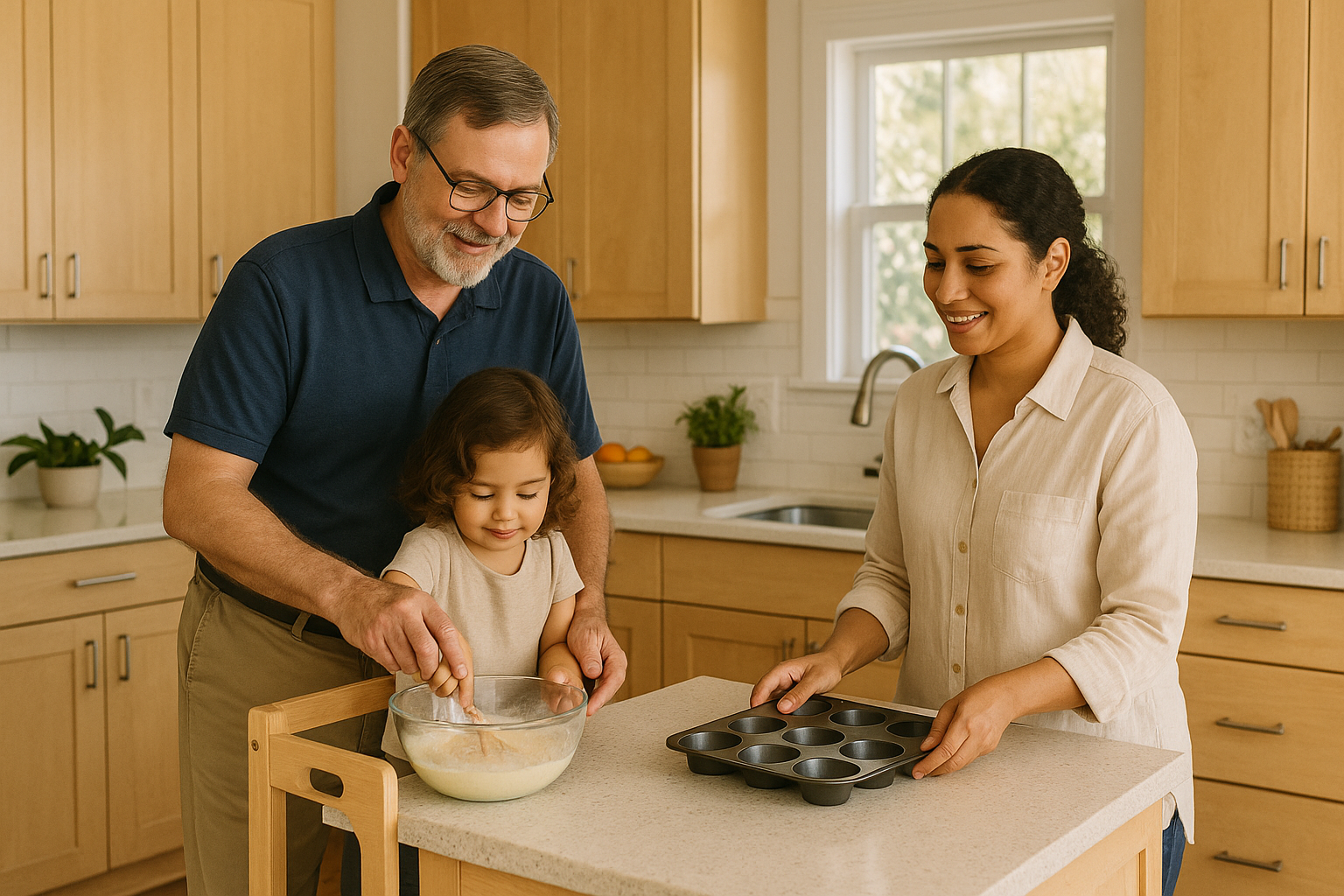
Kitchen Participation: A learning tower or stool for counter access, plus child-safe knives, small pitchers, and cleaning cloths
4. Art and Creativity
Provide art supplies in reachable containers:
-
Crayons, colored pencils
-
Paper, scissors (rounded tips)
-
Stickers, glue sticks
Avoid “junk toys” — instead, choose open-ended materials that invite creativity and manipulation.
5. A Calm, Ordered Space
Keep toys, clothes, and materials in consistent places. When everything has a home, children learn to return items to their place, fostering order.
Consider decluttering regularly. If toys are piled high or crammed into bins, children are less likely to engage deeply.
6. Aesthetic Beauty
Children are sensitive to beauty and harmony. Simple, attractive spaces with natural materials (wood, fabric, metal) create an inviting atmosphere.
Add:
-
Plants (teach watering)
-
Art prints at the child’s eye level
-
Nature treasures like pinecones or shells
Practical Resources
-
Books: “Montessori from the Start” by Paula Polk Lillard offers comprehensive guidance.
-
Materials: Lovevery and Monti Kids provide curated Montessori-inspired materials for the home.
-
Furniture: Look for items on Wayfair or IKEA that fit Montessori principles of accessibility and simplicity.
Questions for Reflection
-
Can your child access their toys, books, and clothes without adult help?
-
Does each item have a home?
-
Are your child’s belongings organized attractively and simply?
By making small changes, your home can become an extension of the Montessori classroom — a space where your child feels respected, capable, and inspired.
Recent Comments